
Skipping rehab sessions can slow healing, reduce strength, and leave a joint stiffer and less reliable than expected. In many cases, the issue is not a single missed appointment, but the loss of physical therapy consistency over time, which can affect pain, movement, and confidence in daily activity.
If you have had surgery or a significant flare-up, it is easy to assume rest alone will resolve things. This guide explains what typically happens when treatment is interrupted, why structured rehab matters, and what current orthopaedic research suggests about staying on track with a post-surgery recovery plan.
Key Takeaways
- Missed rehab can lead to increased stiffness, reduced muscle strength, and delayed return to normal movement.
- Low adherence to clinic visits and home exercise programs is associated with poorer functional outcomes.
- Early movement helps reduce the risk of scar-related stiffness, including Arthrofibrosis after knee procedures.
- Completing rehab supports long-term benefits, particularly following surgery.
Why This Matters Now
Recovery is not only about tissue healing. Your brain, muscles, joints, and movement patterns all require retraining, particularly during orthopaedic rehabilitation.
Research on post-operative patients shows adherence is often lower than optimal, which may explain why some people feel “not quite right” long after healing appears complete.
The real setback is rarely one missed session; it is the disruption to loading, movement practice, and follow-through that prevents the body from consolidating progress.
What Changes in Your Body When You Skip PT
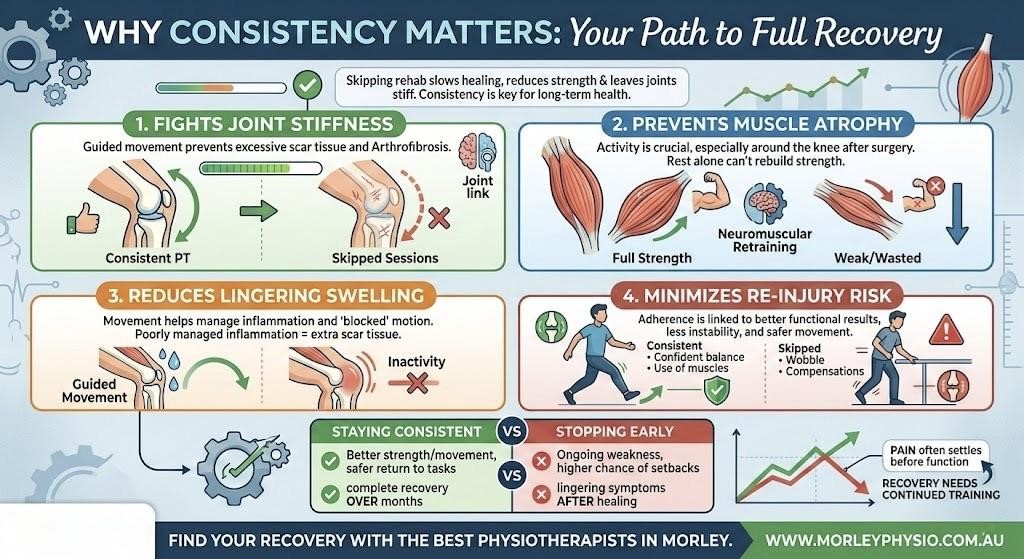
1. Joint stiffness builds faster than most people expect
After surgery, scar tissue forms as part of healing. Without regular guided movement, this tissue can restrict range of motion. In some cases, it may develop into Arthrofibrosis, a condition associated with pain, stiffness, and delayed recovery.
2. Muscles lose strength and control
Reduced activity after surgery can lead to Muscle Atrophy, particularly around the knee. Research following total knee arthroplasty shows significant weakness within the first month, especially in the quadriceps. Recovery relies on consistent exercise and neuromuscular retraining rather than rest alone.
3. Swelling can linger and motion can feel “blocked”
Ongoing Post-Op Inflammation can make exercise uncomfortable, but stopping movement altogether often worsens symptoms. Clinical evidence suggests rehab should progress alongside inflammation management, as inactivity may contribute to additional scar formation.
4. Re-injury risk can rise
Adherence to home exercise programs is linked to improved function and may help reduce recurrence of injury. For those engaging in orthopaedic rehab services, this is important, as missed strengthening and control work can leave the joint underprepared for daily tasks, sport, or unexpected movements.
A Quick Comparison
| If you stay consistent | If you stop early |
| Better chance of regaining strength and movement | Ongoing weakness and reduced range |
| Gradual, safer return to daily tasks | Higher chance of setbacks and compensations |
| More complete recovery over months | Symptoms that linger after the wound heals |
A common mistake is judging recovery based on pain alone. Pain may settle before strength, balance, and joint control are restored. This is why some people stop early and later experience instability or stiffness. That gap is where a structured program, guided by the best physiotherapist in Morley, can make a meaningful difference; not by increasing intensity, but by adjusting load, timing, and technique.
Also Read: How Active Care Physiotherapy Helps Athletes Return to their Sport After Injury
Frequently Asked Questions:
What happens if I stop going to physical therapy early?
You may still heal, but often with reduced strength, poorer movement quality, and increased stiffness. Research shows that patients who do not complete rehab are more likely to have suboptimal functional outcomes.
Is it okay to skip a day of my home exercise program?
Missing one day is usually not an issue. The concern is repeated gaps, as lower adherence can reduce improvements in pain, function, and self-management.
Can scar tissue be removed without surgery if I missed my PT?
In some cases, yes. Symptoms may improve with renewed physiotherapy and mobility work, although established stiffness may require more intensive management. Severe motion restriction may need procedural intervention.
How long does muscle atrophy take to reverse after knee surgery?
It varies. Evidence shows weakness and atrophy can persist for weeks to months, and rebuilding strength generally requires consistent rehabilitation over time.
Why does my joint feel stiff when I don’t do my exercises?
A recovering joint requires regular movement to maintain flexibility and manage swelling. When activity decreases, stiffness, scar tissue tightness, and reduced muscle activation can make the joint feel restricted or heavy.
The Next Step
The safest approach is to view rehab as part of the procedure, not an optional extra. If you have fallen behind, restart early, consult your physiotherapist, and follow a structured program suited to your stage of recovery. For a clinic such as Morley Physio, this means supporting patients to regain steady progress before minor setbacks become larger issues.
If your recovery has stalled or your joint still feels stiff, do not leave it to chance. Book an assessment with Morley Physio and follow a clear plan to get back on track.