
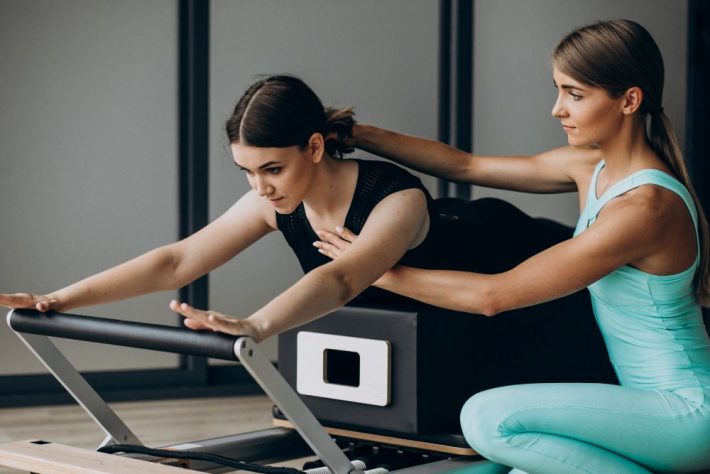
Clinical Pilates can help desk workers build strength, improve movement control and reduce the physical load that comes from sitting for long periods. The right approach to clinical Pilates depends on your symptoms, work habits, fitness level and whether pain is occasional, persistent or linked to an existing injury.
Key takeaways
- Sitting all day is not just a “posture problem”. It often involves reduced movement variety, lower muscle endurance, and repeated loading in the same positions.
- Clinical Pilates can be useful for desk workers because it combines strength, control, mobility, and body awareness.
- A physio-led approach may be more suitable if you have pain, injury history, movement restrictions or uncertainty about what exercises are safe.
- A good Pilates plan should support your workday habits, not replace basic movement breaks, walking and ergonomic adjustments.
- Seek tailored advice if symptoms are persistent, spreading, severe or linked with numbness, weakness or other unusual signs.
Why desk work can leave your body feeling weaker or tighter
Desk work usually involves long periods of sitting, screen use, repeated reaching, keyboard work, and limited whole-body movement. Over time, many people notice stiffness through the neck, upper back, lower back, hips or shoulders.
Safe Work Australia describes sedentary behaviour as activities done while sitting or reclining, including computer work. It notes that sitting may be harmful when it continues for longer than 30 minutes without a break or occurs for most of the workday. It also states that more than seven hours a day of sedentary behaviour is too much.
This does not mean sitting is automatically dangerous, or that every ache needs treatment. The issue is often lack of variation. Bodies generally tolerate positions better when they can move, change load and use muscles in different ways.
For desk workers, common patterns include:
- Reduced hip and spinal movement during the day
- Low endurance in trunk and postural muscles
- Tension through the neck and shoulders
- Shallow breathing or bracing during stress
- Reduced confidence with bending, lifting or exercise
- Flare-ups when returning to sport or gym training too quickly
Clinical Pilates may help by gradually reintroducing controlled movement and strength in a way that can be adapted to the person.
What clinical Pilates means in a physiotherapy setting
Clinical Pilates is a supervised exercise approach that uses Pilates-based movements to support strength, flexibility, posture, balance, coordination and rehabilitation goals. In a physiotherapy clinic in Morley WA, it usually begins with an assessment rather than a generic class.
For a desk worker, that assessment may look at spinal movement, hip mobility, shoulder control, core endurance, breathing patterns, pain triggers and functional tasks such as squatting, lifting or sitting tolerance.
The “clinical” part matters because the program can be modified. A person recovering from a disc injury, someone with neck pain, and someone who simply feels deconditioned after years of desk work may all need different starting points.
Clinical Pilates can include mat-based exercises, reformer-based exercises, small equipment and individualised movement cues.
The goal is not to force perfect posture. It is to help the body become stronger, more adaptable and more confident across different positions.
How clinical Pilates may help after long hours sitting
Clinical Pilates may be useful for desk workers because it targets several areas at once.
- It can build trunk and hip strength, which may help with everyday tasks such as sitting, standing, lifting, walking and exercising.
- It can improve movement awareness, so you notice when you are bracing, collapsing through the upper back or overusing the shoulders.
- It can also support mobility through areas that often feel restricted after long periods at a workstation.
The World Health Organization recommends that adults do physical activity and muscle-strengthening activity on a regular basis.
Clinical Pilates, gym training or regular Pilates?
Different options can suit different people. The best choice depends on your symptoms, goals and need for supervision.
| Situation | What it may suggest | What to do |
| You feel stiff after work but have no significant pain | You may need more movement variety and general conditioning | Start with movement breaks, walking and a suitable exercise routine |
| You want Pilates for fitness and have no injury concerns | A general Pilates or reformer class may be appropriate | Choose a qualified instructor and progress gradually |
| You have recurring back, neck, hip or shoulder pain | Generic classes may not address your specific triggers | Consider a physiotherapy assessment before starting |
| You are returning after injury, surgery or a long break | You may need modified exercises and closer supervision | Ask about physio-led clinical Pilates |
| You feel unsure which movements are safe | Confidence and education may be as important as exercise choice | Book an assessment with a physiotherapist |
For desk workers, another warning sign is repeated flare-ups. If your back or neck settles for a few days and then returns every time work gets busy, the issue may need a more tailored plan. That plan might include clinical Pilates, workstation changes, strength training, pacing, manual therapy, education or referral if further investigation is needed. Seek medical or physiotherapy advice if symptoms are severe, persistent or worsening.
Frequently Asked Questions:
Is clinical Pilates good for office workers?
It can be a good option for office workers who want to improve strength, mobility and movement control after long periods sitting. It may be especially useful when a physiotherapist tailors the program to your pain history, work habits and goals.
Can clinical Pilates fix poor posture?
Clinical Pilates should not be viewed as a quick fix for posture. It may help you build strength, awareness and movement variety, but posture is influenced by many factors, including workstation setup, stress, fatigue, fitness and how often you change position.
How often should desk workers do clinical Pilates?
The right frequency depends on your goals, symptoms and starting point. Some people benefit from weekly supervised sessions, while others may combine supervised sessions with home exercises and regular movement breaks.
Is clinical Pilates better than reformer Pilates for back pain?
Not always, but clinical Pilates may be more suitable if you have back pain, injury history or uncertainty about safe movement. The main difference is the assessment, individualisation and physiotherapy supervision.
Do I need a referral for clinical Pilates?
Referral requirements can vary. Many physiotherapy services can be contacted directly, but pricing, eligibility, private health requirements and appointment availability should be confirmed with the clinic.
Talk to an expert
If discomfort from desk work is persistent, unclear or starting to affect your confidence, workday comfort or ability to exercise, it may be worth getting tailored advice. You can book an appointment or contact Morley Physiotherapy Centre to ask whether clinical Pilates is suitable and what the first assessment would involve.