
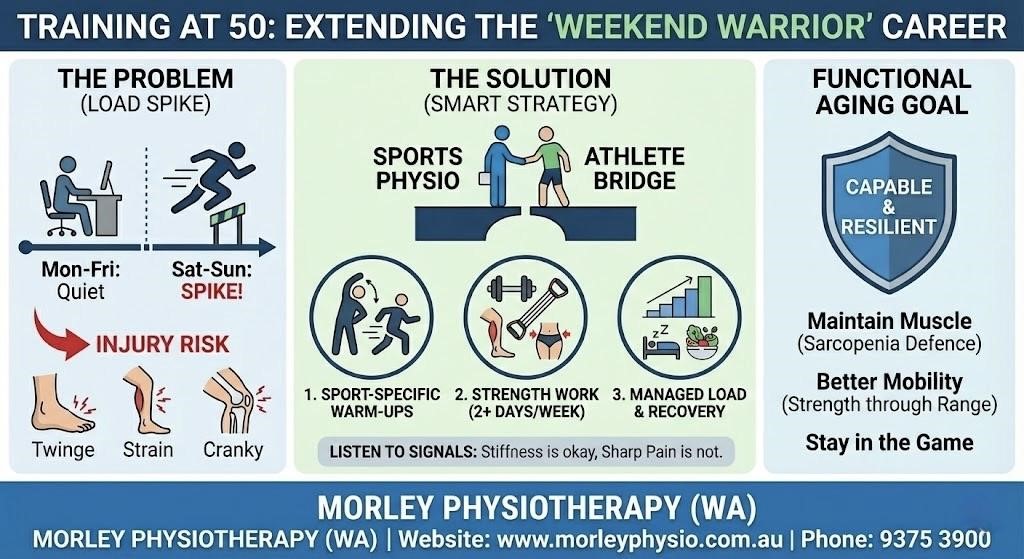
Many Australians keep sport in the diary well past 50 – social footy, weekend rides, parkruns, tennis, and golf. The biggest change is often scheduling. Work and family commitments compress training into one or two hard sessions, then the body is asked to sprint, jump, and twist after several quieter days. That load spike is where the familiar Achilles twinge, calf strain, or cranky knee often shows up.
Sports physiotherapy helps people stay active by matching training to what the body can tolerate now, then building capacity in measured steps.
What changes after 50, and why training still pays off
When strength work drops away, muscle mass and power tend to decline with age. Sarcopenia describes age-related loss of muscle mass and function, which affects mobility and injury risk over time.
Adaptation still happens. Australia’s physical activity guidelines recommend muscle-strengthening activities on at least two days per week, and the World Health Organisation sets the same benchmark for adults.
How sports physiotherapy supports the time-poor athlete
A sports physio sits between “rest and hope” and “train through it”. Sessions usually include a focused history, hands-on assessment, and testing relevant to your sport, such as calf endurance for runners or landing mechanics for field sports. The aim is to identify the main driver and address it.
Load management is often key. Sudden jumps in distance, speed, hills, or match minutes can irritate tendons and joints, particularly when training is limited to weekends. A physio can map out small, trackable progressions with enough recovery to support consistency.
Functional Aging as a sporting goal
For midlife sport, “capable” matters more than “fit”. Strength, balance, and control through sport-specific ranges help when play becomes unpredictable. They also improve awareness of warning signs. Mild stiffness after a new session can be normal; sharp pain, swelling, or symptoms lasting several days are not.
The habits that keep you on the park
Most recreational injuries follow under-preparation combined with a single high-load session. Physios usually focus on three areas.
- Warm-ups should resemble the sport. Touch footy needs short accelerations, side-steps, and controlled stops, not just jogging.
- Strength work should target common weak links, often calves, hamstrings, hips, and trunk control.
- Finally, the weekly plan needs to be repeatable. One solid strength session plus a shorter top-up often beats an ambitious program that falls apart after two weeks.
This aligns with Sports Physiotherapy principles: identify risk factors early, build capacity with targeted exercise, and manage training load rather than chasing pain.
Mobility for Seniors, without endless stretching
Mobility helps when joints genuinely lose range, but perceived tightness often improves with strength through range and better control. Many people feel looser after loaded calf raises or split squats than after long stretching sessions.
A practical mix is daily movement, such as walking or stairs, plus two strength sessions per week with adequate recovery. Healthdirect supports twice-weekly strength training, which suits many active people in their 50s.
When injury happens, return in stages
A quick return is tempting when sport is a social outlet. Safer progressions move from walking, to jogging, to change of direction, then sport-specific drills before full training. Clear milestones reduce repeat injuries and rebuild confidence.
Sleep, stress, and nutrition sit behind all of this. Without enough recovery and fuel, training becomes harder to sustain. That’s Healthy Aging in practical terms – staying ready for the next session.
Also Read: How Active Care Physiotherapy Helps Athletes Return to their Sport After Injury
Frequently Asked Questions:
- What is the 80/20 rule in physiotherapy?
Some clinicians use an informal 80/20 idea, where a small number of factors explain most symptoms. It helps prioritise issues like load spikes or key strength deficits. It’s a guide, not a rule.
- Can I reshape my body at 50?
Yes. Resistance training supports muscle, and nutrition influences fat loss. Progress is usually slower than at 25, so think in months, not weeks.
- How long should a 50 year old workout?
Public health guidelines suggest around 150 minutes of moderate activity per week, plus strength training on two days. Start smaller for injury prevention.
- Do I need sports physio if I’m not injured?
It can help. Screening, technique feedback, and tailored programs may reduce flare-ups, especially with stop-start training.
- What early signs mean I should back off?
Swelling, night pain, sharp impact pain, or worsening soreness are warning signs. If symptoms persist for a week, get assessed.
If you want to keep training confidently through your 50s and beyond, book an assessment with Morley Physiotherapy in WA. Visit https://morleyphysio.com.au/ to choose a convenient clinic and appointment time.