
Pain can shrink your world. You stop turning your head fully, shorten your stride, or avoid the stairs altogether. Dry needling and exercise therapy address that pattern from different angles. Needling can calm a sensitive patch of muscle and reduce protective guarding, while exercise builds strength, confidence, and tolerance to everyday loads. Many clinics offering Beechboro physiotherapy use this pairing because it supports both short-term comfort and longer-term function.
What is dry needling
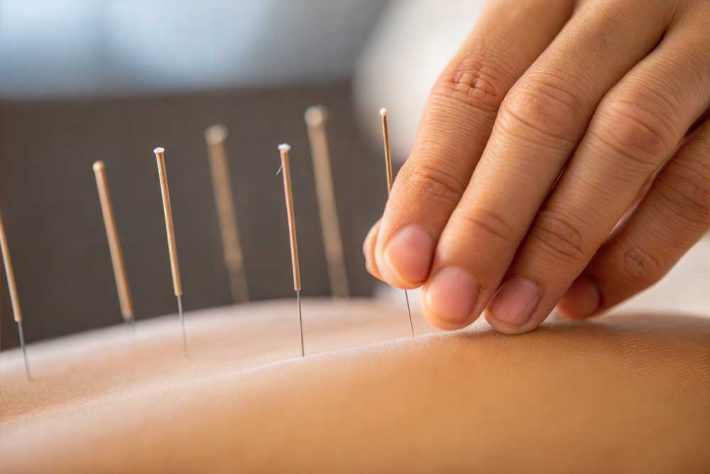
Dry needling is a treatment where a trained clinician uses a very thin, sterile needle to target a sore or tight spot in a muscle. The needle passes through the skin into the muscle for a short time. No medicine is injected, which is why it’s called “dry”.
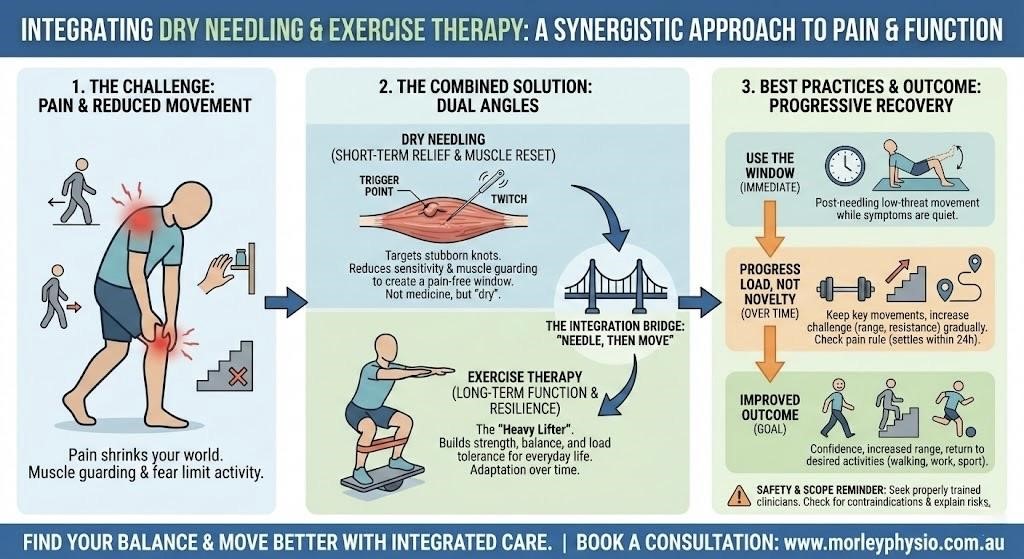
Clinicians often use it when a muscle feels like it has a stubborn knot and pressing on it reproduces your familiar pain. You may feel a brief twitch in the muscle, followed by a sense of release. The aim is to ease pain and reduce muscle guarding so you can move more freely and complete your exercises with less discomfort.
Why exercise still does the heavy lifting
Exercise is what helps your body cope better day to day. It strengthens muscles, improves balance, and makes joints more comfortable to use. With knee osteoarthritis, Australian guidance places exercise and physical activity at the centre of care, not as an optional extra.
The key is that the program should suit you. It needs to match what you can do now, what tends to flare symptoms, and what you want to return to (walking further, climbing stairs, playing sport, or getting through a work shift). Programs should also be reviewed and progressed over time, as bodies adapt and pain settles.
How to integrate dry needling with exercise therapy without wasting the session
A useful session links hands-on treatment to a movement outcome you can measure.
- Start with a specific barrier: Dry needling works best when it targets a clear limiter found during assessment, such as painful quadriceps that block squats or hip rotators that flare with walking. Many people who book a physio in Beechboro notice short-term relief, and outcomes are better when that relief feeds directly into training.
- Needle, then move: If needling reduces sensitivity, use that window straight away. Follow with low-threat movement such as gentle range work, isometric holds, or an easy bike. The goal is to practise better movement patterns while symptoms are quieter.
- Progress load, not novelty: Stick with a small set of key movements and increase difficulty over time—more range, more resistance, more repetitions, then task-specific work like stairs or longer walks. Plan around post-needling soreness by keeping the first day lighter.
Agree on a pain rule: Mild discomfort during exercise can be acceptable if symptoms settle back to baseline within 24 hours. If pain escalates or lingers longer, the dose or exercise choice needs adjusting.
What the evidence suggests, especially for knee osteoarthritis
Dry needling research is mixed because studies use different muscles, dosages, and outcome measures.
- For hip and knee osteoarthritis, a systematic review reported very low-quality evidence of benefit, so clinicians should avoid making big promises.
- Some trials do report added improvements when dry needling is paired with exercise programs.
For most people, the practical take-home is simple. Exercise remains the engine of long-term change. Dry needling may help you stay engaged with strengthening and walking progressions when pain would otherwise derail them. If you have ever searched “physio near me” during a flare, this blend of symptom control and a structured plan is often what you are hoping for.
Also Read: Understanding Dry Needling: How It Can Help Relieve Muscle Pain and Tension
Before you choose the right provider…
Dry needling is generally safe when a properly trained clinician uses clean technique and sterile, single-use needles. Even so, side effects such as bruising or short-lived soreness can occur. Rarely, more serious complications may arise, such as a collapsed lung if needling is performed near the chest. That’s why training and careful site selection matter.
Before treatment, a Beechboro musculoskeletal physio should screen for factors that increase risk, including blood thinners, bleeding disorders, lowered immunity, recent surgery, or skin infection at the site. They should also explain what you may feel during and after the session, and what warning signs mean you should seek advice.
Scope matters too. ESSA lists dry needling as an “expanded scope” activity rather than routine practice for Accredited Exercise Physiologists, and some funders will not cover it when delivered by that profession.
When choosing a provider, ask:
- What training have you done?
- How do you manage infection control?
- How will this link to my exercise plan?
Frequently Asked Questions:
1. Can exercise physiologists do dry needling?
ESSA states dry needling is outside the foundational scope of Accredited Exercise Physiologists. Some may train in it as an added skill, but it is not routine AEP practice. Always check registration, insurance, and whether your funding covers it.
2. Is a combination of exercise and dry needling effective for knee OA?
Exercise is first-line care for knee osteoarthritis. Dry needling may reduce pain short term and help some people tolerate strengthening. Evidence is mixed, so it’s best used as an add-on to a steady exercise program targeting quads, hips, and walking tolerance.
3. Do professional athletes do dry needling?
Yes. In high-performance sport it’s used alongside assessment, load management, and exercise, with clear consent and strict infection control.
4. Should I exercise straight after needling?
Gentle movement is usually fine and often helpful. If you feel sore, keep training lighter for 24 hours, stay hydrated, and avoid testing a new best.
5. How do I know a clinic’s approach is right?
Look for measurable goals and a clear home program. If a clinic advertises dry needling in Beechboro, it should also explain how your exercises will progress over weeks, not just what happens on the table.