
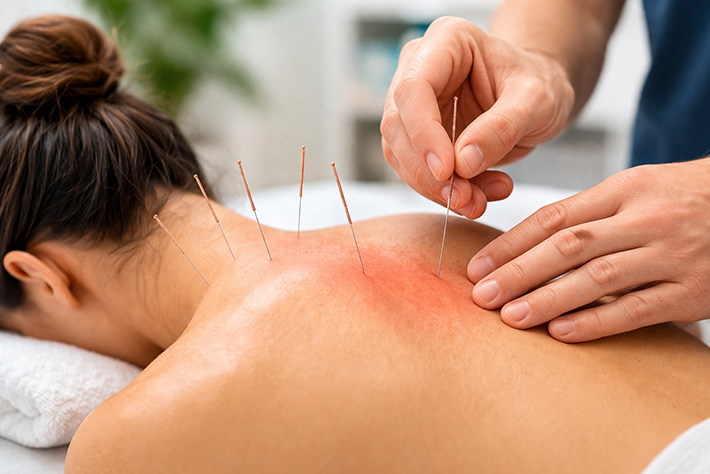
Needling treatments can appear identical from the outside, so it is easy to assume they serve the same purpose. When people ask about Dry needling vs acupuncture, they are usually trying to determine which approach best matches the source of their pain.
What each method is trying to do
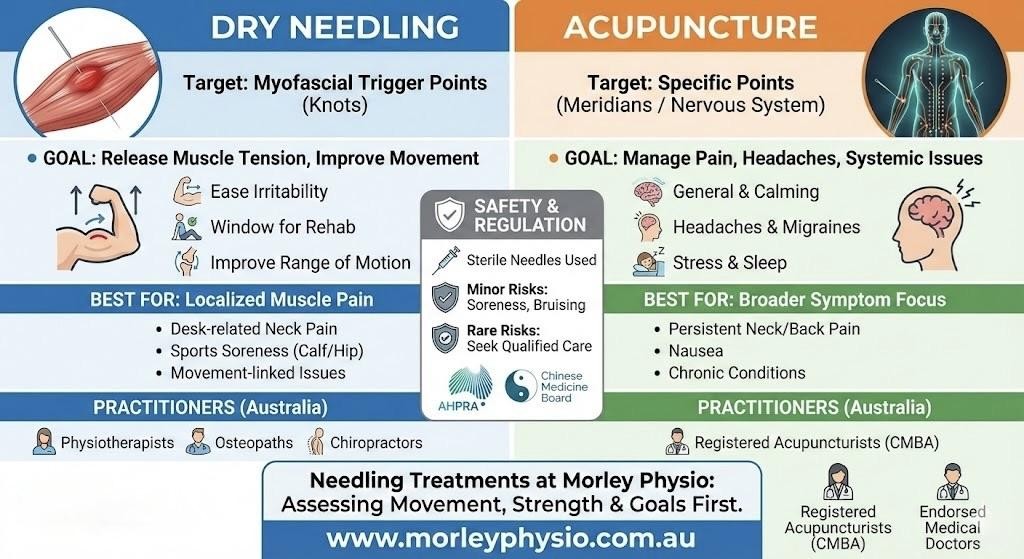
Acupuncture involves placing fine, sterile needles at specific points on the body. Some practitioners explain this through meridians and qi, while others focus on nervous system effects. Australian public health information recognises acupuncture as a complementary therapy used for musculoskeletal pain, headaches and nausea.
Dry needling uses similar needles, but the target is typically a tight, sensitive spot within a muscle. The goal is to reduce muscle irritability so movement becomes easier and exercise more comfortable. In Australia, it is most commonly provided by physiotherapists, osteopaths and chiropractors.
Training and regulation in Australia
Chinese medicine practitioners, including acupuncturists, are regulated by the Chinese Medicine Board of Australia under AHPRA.
Medical practitioners may also use the title “acupuncturist” if their registration is endorsed for acupuncture or they meet relevant board requirements.
Trigger points and why dry needling can suit muscle-driven pain
Dry needling is often used for myofascial pain, where a muscle feels tight and may refer pain elsewhere. People commonly notice this with desk-related neck pain or after training increases that leave muscles like the calf or hip flexor persistently sore.
Research reviews suggest dry needling can provide short-term pain relief for myofascial trigger point presentations and may improve range of motion. Its practical value is often the window it creates for rehabilitation; strengthening, gradual return to activity, and improved load management.
Where acupuncture may fit better
Acupuncture is often chosen when symptoms are not clearly linked to a specific muscle or movement pattern. Many people seek it for ongoing neck and back pain, headaches and migraines, and sometimes for sleep or stress-related concerns. The number of sessions can vary, so it is helpful to ask what a reasonable trial involves.
Some people find acupuncture feels more general and relaxing, while dry needling can feel more intense at a specific point. Experiences vary, and clear communication during treatment is important.
Safety and what to expect after a session
Temporary soreness or bruising can occur with both approaches. Healthdirect notes risks such as infection and, in rare cases, more serious complications like nerve injury or organ puncture if needling is performed unsafely.
For dry needling, the Australian Sports Commission highlights pneumothorax as a rare but recognised risk when treating areas near the chest wall.
Choose a qualified practitioner, ask about their training, and share relevant health details such as blood thinner use, pregnancy, immune conditions, or a history of fainting. If unusual symptoms develop after treatment, seek medical advice.
Choosing between them in a clinic setting
Start by considering the pattern of your symptoms. If pain is strongly linked to movement and you have clear muscle tenderness, dry needling may be useful as part of a physiotherapy plan. If you are seeking a broader, symptom-focused approach, acupuncture may be more suitable.
At Morley Physio, a clinician will assess movement, strength and contributing factors first, then determine whether needling adds value. When used appropriately, dry needling in Morley supports measurable goals such as improved sitting tolerance, better sleep, or returning to sport with fewer flare-ups.
Also Read: Understanding Dry Needling: How It Can Help Relieve Muscle Pain and Tension
Frequently Asked Questions:
What is the main difference between dry needling and acupuncture?
Dry needling targets sensitive points in muscle to reduce myofascial pain and improve movement. Acupuncture uses defined points based on Chinese medicine and is applied for pain and other symptoms. While the needles may appear similar, the treatment goals and clinical reasoning differ. Assessment approach is often the key distinction in practice.
Does dry needling hurt more than acupuncture?
Dry needling may feel sharper as it targets a tight muscle band and can produce a brief twitch response. Acupuncture is often described as a dull ache, tingling or heaviness. Both should remain tolerable. If discomfort is too strong, ask the practitioner to adjust technique or depth.
Is dry needling effective for neck pain from muscle tension?
Evidence suggests dry needling can reduce neck pain intensity in the short term when related to myofascial trigger points. It is most effective when combined with exercise, posture and activity changes, and other physiotherapy strategies. Without addressing underlying factors, symptoms may return.
Can acupuncture help headaches or migraines?
Australian health information includes headaches and migraines among common reasons for seeking acupuncture. Some people report benefit, while others notice minimal change. Tracking triggers such as sleep, stress, jaw tension, hydration and screen use can support better outcomes alongside treatment.
What are the risks and who should be cautious?
Soreness and bruising are relatively common. Serious complications are rare but possible if needling is performed incorrectly. People who are pregnant, on anticoagulants, immunocompromised, or have complex medical histories should discuss suitability with their GP. Always choose appropriately registered and trained practitioners who use sterile, single-use needles.